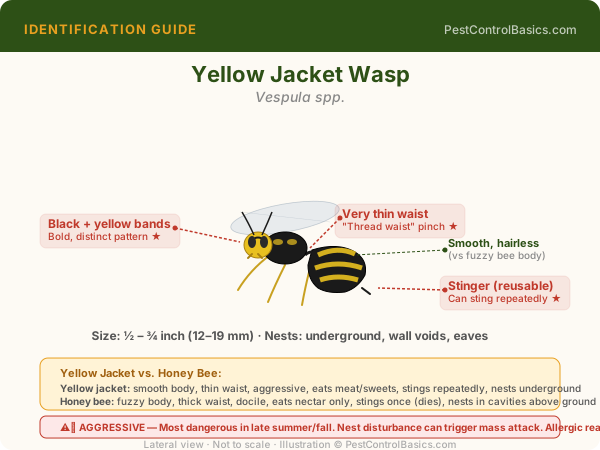
⚠️ Photos loaded from Wikipedia/Wikimedia Commons. Appearance varies by region, age, and sex.
Nest Identification
Find the nest type before you treat
The nest type determines the treatment approach. Treating an underground yellow jacket nest the same way as a hanging paper wasp nest will result in failure — and likely multiple stings.
🌏
Yellow Jacket
Underground Nest
Single hole in the ground with heavy insect traffic. Often found in lawns, flower beds, and at the base of walls. The underground cavity can be the size of a basketball by late summer.
⚠ Treat at Night — High Risk
🏠
Yellow Jacket / European Hornet
Wall Void Nest
Entry through a gap in siding, eaves, or foundation. Buzzing heard inside walls. Can be 10,000+ insects in late summer. Never seal the entry hole before killing the colony — wasps will chew through drywall.
🔒 Professional Recommended
🏈
Bald-Faced Hornet
Hanging Paper Nest
Gray, football-shaped papery nest hanging from tree branches, eaves, or utility lines. Distinctive — papery layered construction. Colony of 400–700 workers. Treat at night from maximum distance with a jet aerosol.
🔒 Professional for Large Nests
☁
Paper Wasp
Open Umbrella Nest
Visible open comb — like an upside-down umbrella with visible cells. No outer paper envelope. Usually small (golf ball to softball size). Under eaves, porch ceilings, door frames. Easiest DIY treatment.
✓ DIY Straightforward
🌳
European Hornet
Hollow Tree / Attic Nest
Builds in hollow trees, attic spaces, or within wall cavities. Often not discovered until colony is very large. If inside the structure, professional treatment is strongly recommended.
🔒 Professional Recommended
🏗
Mud Dauber
Mud Tubes
Small clay/mud tubes on walls, under eaves, inside garages. Each tube is a separate cell. Inactive during the day — adults don't defend these aggressively. Knock down manually or ignore.
✓ Low Risk — Manual Removal
Safe Removal Protocol
How to treat a wasp nest without getting stung
The most common mistake: treating in daylight when thousands of foragers are out and the colony is at full defensive alert. Follow this sequence exactly.
⚠ Never Treat These Situations Yourself
Wall void nests larger than a baseball — professionals use injection equipment to reach every part of the colony. Africanized honey bees in any quantity — do not approach, call a licensed beekeeper or pest company immediately. Any nest if you have a venom allergy — do not attempt DIY removal under any circumstances. Nests above 10 feet requiring a ladder — the fall risk combined with stings is not worth it.
1
Wait until full dark — at least 30 minutes after sunset
All foraging workers return to the nest at dark. Treating at dusk still leaves thousands of returning workers that will attack. Full dark means maximum colony is inside and minimum flight activity.
2
Dress for protection — no exposed skin
Long sleeves, long pants, tucked in at ankles and wrists. Gloves. Eye protection. A bee veil if available. Light-colored clothing — dark colors are more likely to trigger defensive response. No perfume or scented products.
3
Use a red-light flashlight, not white light
Wasps navigate by light. A red LED flashlight is nearly invisible to them — use it to locate the nest entry point without triggering flight. Never shine a white flashlight directly at an active nest.
4
Apply a fast-acting jet aerosol from maximum distance
Stand at least 10–15 feet back. Use a wasp freeze or pyrethroid jet spray that shoots 15–20 feet. Direct the stream precisely into the nest entrance. Apply for 5–10 seconds. Back away immediately. Do not linger — some workers will emerge and fly erratically.
5
Do not seal the entrance — leave it open overnight
Returning foragers that weren't in the nest will contact the treated entrance and carry pesticide inside. Sealing the hole traps surviving wasps, which may chew through walls. Leave open and treat again the following night if activity continues.
6
Remove the nest after 48 hours of zero activity
After 48 hours with no visible wasp movement, the colony is eliminated. Remove the nest during the day while wearing gloves — abandoned nests attract other insects. For underground nests, fill the hole with soil once confirmed inactive.
💧
Jet Aerosol — Best DIY Treatment
Raid Wasp & Hornet / Spectracide Wasp Freeze
How it works: Pyrethroid-based aerosol with a jet stream reaching 20+ feet. "Wasp Freeze" products contain tetramethrin which causes instant knockdown (paralysis) before kill — critical for preventing counter-attack. Apply directly into the nest entrance. The jet allows treatment from a safe distance. Purchase the largest can available — small nests need 8–10 seconds of continuous spray.
🌿
Dust — Underground & Wall Void Nests
Delta Dust (Deltamethrin) Applied with Bulb Duster
How it works: For underground nests or wall void nests where a spray stream won't penetrate, puff deltamethrin dust directly into the nest entrance with a bulb duster. Workers tracking through the treated entrance carry dust to the colony interior. Cover the hole loosely with a rock (don't seal) after application. Highly effective for hard-to-reach nests — often eliminates the colony within 24–48 hours.
★★★★★
Best for Underground
Sting Treatment
What to do immediately after being stung
1
Leave the area immediately
Walk — don't run — away from the nest. Wasps release alarm pheromones when they sting. Retreating fast reduces the number of additional stings. Move at least 100 feet away before stopping.
2
Wasp stingers — no removal needed
Unlike honeybees, wasps do not leave stingers. You don't need to remove anything. Wash the sting site with soap and water to remove surface venom.
3
Ice and OTC pain relief
Apply ice (15 min on, 15 min off) to reduce swelling. Ibuprofen or acetaminophen for pain. Hydrocortisone cream or oral antihistamine for itching and local reaction. Normal reaction: pain, redness, swelling at sting site only.
4
Watch for anaphylaxis — call 911
Anaphylaxis signs: difficulty breathing, throat tightening, dizziness, widespread hives, rapid pulse, loss of consciousness. This is life-threatening. Call 911 immediately. If EpiPen is available, use it. Do not wait to see if symptoms improve.
⚡ If You Know You're Allergic
Carry an EpiPen at all times during wasp season. Never attempt nest removal yourself. Wear your medical alert bracelet. Tell anyone who is with you about your allergy so they can act if you cannot. Even a single sting can cause fatal anaphylaxis in sensitized individuals within minutes.