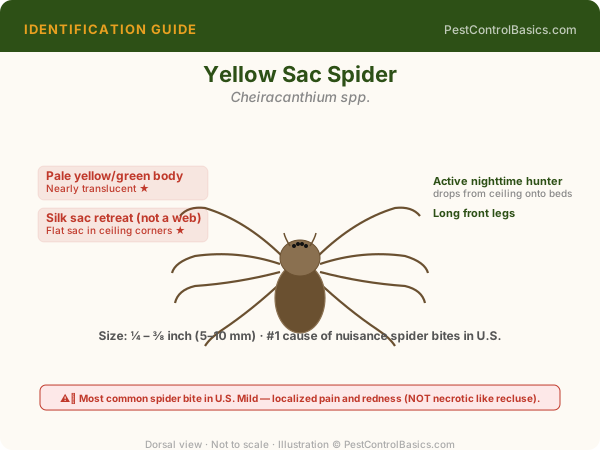
Original illustration by PestControlBasics.com. Use anatomical labels above to confirm your identification.
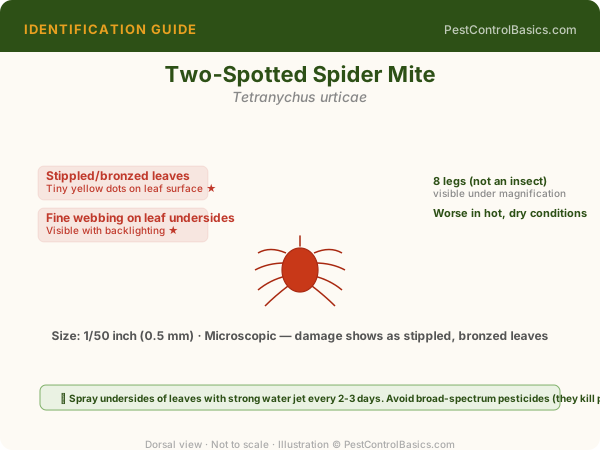
Original illustration by PestControlBasics.com. Use anatomical labels above to confirm your identification.
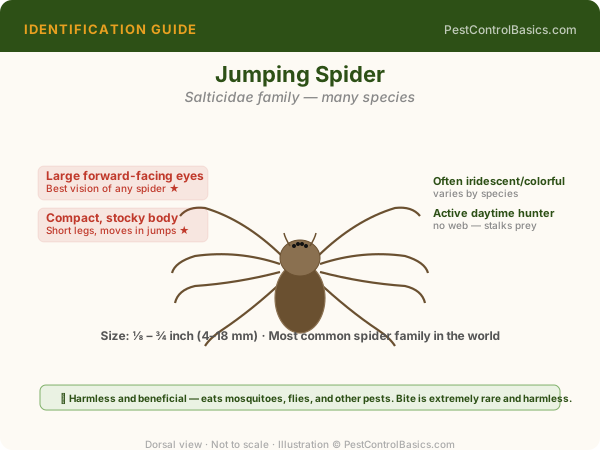
Original illustration by PestControlBasics.com. Use anatomical labels above to confirm your identification.
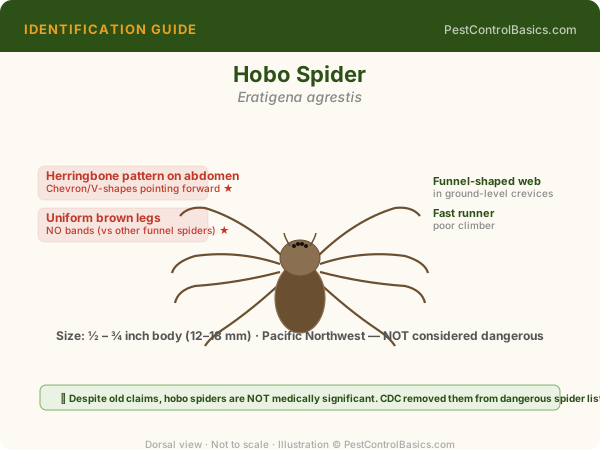
Original illustration by PestControlBasics.com. Use anatomical labels above to confirm your identification.
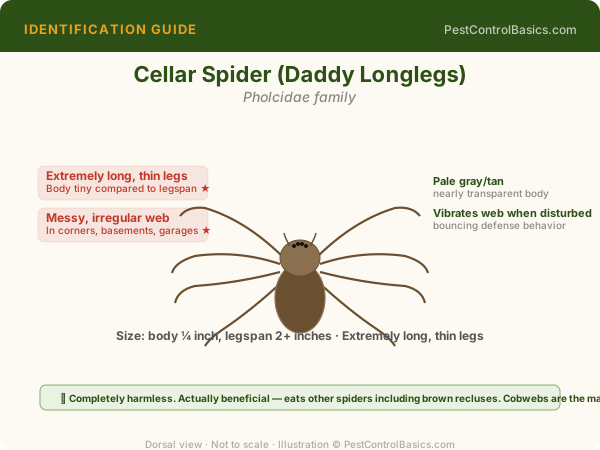
Original illustration by PestControlBasics.com. Use anatomical labels above to confirm your identification.

Original illustration by PestControlBasics.com. Use anatomical labels above to confirm your identification.
🔍 Identification
Body: 10-35mm depending on species; grey-brown with dark stripe pattern; robust and hairy; large forward-facing eyes (good vision for active hunters); 8 eyes in 3 rows — top row: 2 large; middle row: 2 medium; bottom row: 4 small. They don't build webs — they hunt actively on the ground. Female carries white silk egg sac attached to spinnerets; spiderlings ride on mother's back after hatching.
🧬 Biology & Behavior
Wolf spiders are among the most common spiders in every environment — lawns, gardens, forests, fields, and homes. They hunt actively at night, pursuing prey on the ground. They're important predators of insects and other invertebrates. They enter homes through gaps at ground level — following prey or warmth in fall.
⚠️ Damage & Health Risk
Psychological disturbance from size. Bites are extremely rare and produce mild, transient local pain — less significant than a bee sting. No necrotic tissue or serious medical concern.
🔧 DIY Treatment
No treatment needed for most situations. Seal entry points to prevent indoor encounters. Perimeter bifenthrin spray reduces wolf spiders at the foundation. Glue traps capture indoor individuals. Remove ground-level outdoor clutter that provides wolf spider habitat near the structure.
👷 When to Call a Pro
Rarely warranted alone.