HomePest LibraryYellow Jacket
⚠ Most Aggressive Stinging Insect
🐝

Yellow Jacket

Vespula vulgaris, V. germanica, V. squamosa & others

Yellow jackets peak in August at maximum colony size and maximum aggression. Unlike bees, they can sting repeatedly and will chase threats aggressively. Treat all yellow jacket nests at night when the entire colony is inside, using a jet aerosol from 15+ feet. Never during the day.

Peak aggressionAugust — maximum colony size
StingRepeated — no barb; not a bee
Nest typesUnderground, aerial, structural void
Treatment timeNight only — full colony inside
Anaphylaxis riskSeek emergency care for throat swelling or difficulty breathing
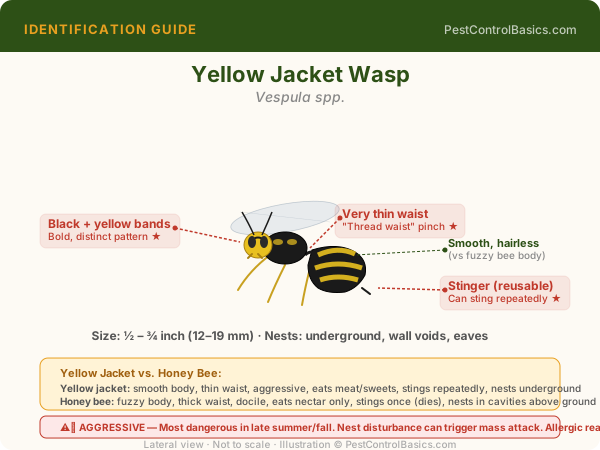
📐 FIELD GUIDE ILLUSTRATION
Yellow jacket wasp (Vespula spp.) identification illustration with labeled anatomical features — PestControlBasics.com

Original illustration by PestControlBasics.com. Use anatomical labels above to confirm your identification.
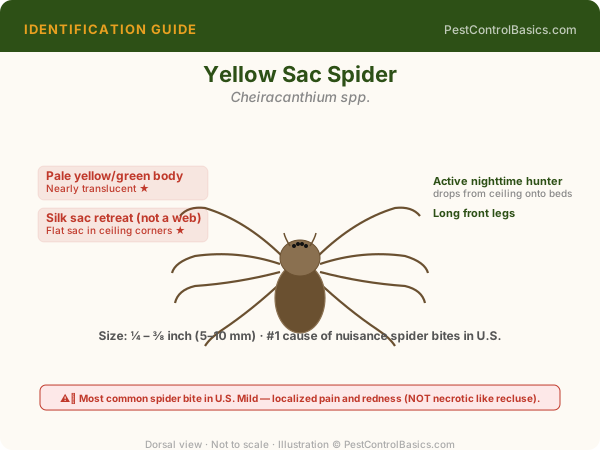
📐 FIELD GUIDE ILLUSTRATION
Yellow Sac Spider (Cheiracanthium spp.) identification illustration with labeled anatomical features — PestControlBasics.com

Original illustration by PestControlBasics.com. Use anatomical labels above to confirm your identification.

🔍 Identification Photo

Use this photo to confirm your identification. Click to enlarge. Correct ID is the essential first step to effective treatment.

Yellow jacket (Vespula sp.) — bright yellow-black banding; smooth (not hairy) abdomen; wings fold lengthwise at rest; ag

Yellow jacket (Vespula sp.) — bright yellow-black banding; smooth (not hairy) abdomen; wings fold lengthwise at rest; aggressive colony defenders

📷 Wikipedia / Wikimedia Commons / CC BY-SA

⚠️ Photo loaded live from Wikipedia/Wikimedia Commons (CC BY-SA). Appearance varies by region, age, and sex. When uncertain, contact a licensed pest professional.

Identification

Yellow jacket vs. honey bee vs. paper wasp

Yellow jackets are frequently confused with honey bees and paper wasps. Correct identification matters because the treatment approach and urgency differ significantly.

Yellow jacket vs. honey bee: Yellow jackets have a very narrow, pinched waist and are smooth and shiny — they look like they're wearing body armor. Honey bees are fuzzy with visible body hair and a less pronounced waist. Yellow jacket coloring is brighter, cleaner yellow and black. If it's fuzzy — bee. If it's smooth and shiny — yellow jacket.

Yellow jacket vs. paper wasp: Paper wasps are slender, long-legged, and build open umbrella-shaped nests under eaves. Yellow jackets are more compact and robust. Paper wasp colonies are much smaller (20–75 workers) and less aggressive. A nest with open cells visible = paper wasp. Enclosed papery nest = yellow jacket or bald-faced hornet.

Finding the nest: Watch the flight path of returning workers in the early morning. They fly directly to and from the nest. In late summer, you may see workers entering and exiting a hole in the ground (underground nest) or a gap in siding or soffits (structural void nest).

Treatment Protocol

Nighttime treatment — the only safe approach

Why nighttime only: At night, all workers are inside the nest, the colony is sluggish from cooler temperatures, and the queen is present. Daytime treatment kills workers on the surface but leaves thousands inside — they boil out within seconds to attack the threat. Nighttime treatment reaches the full colony.

Equipment: A jet aerosol (Spectracide Wasp and Hornet, Raid Wasp and Hornet) that sprays 15–20 feet. Red flashlight or red cellophane over a white light (insects cannot see red light well, reducing agitation). Long pants, long sleeves, and closed shoes regardless of temperature.

Underground nest protocol: Approach slowly from upwind. Direct a 3–5 second jet stream into the nest opening. Back away immediately without turning and running (movement triggers chase response). Return in 24 hours to verify no activity before sealing the opening.

Structural void nest: Do NOT seal the entrance before treating — workers trapped inside will chew through drywall to reach the interior. Treat first, confirm zero activity, then seal.

⚠ Anaphylaxis Emergency

Throat tightening, difficulty breathing, widespread hives beyond the sting site, dizziness, or loss of consciousness after a yellow jacket sting = call 911 immediately. Anaphylaxis develops within minutes and requires epinephrine. If you have a known bee/wasp allergy, always carry an EpiPen outdoors.

Quick Reference
Size1/2–3/4 inch
ColorBlack and yellow banded
NestPapery — underground, aerial, or structural
StingRepeated — smooth stinger
Aggressive?Yes — especially late summer
vs. Honey beeYellow jacket waist is very narrow; bee is fuzzy
Colony sizeUp to 5,000 workers
Best productJet aerosol (Spectracide Wasp & Hornet)
Related Guides
🐝 Full Wasp & Hornet Guide →🐝 Carpenter Bee Guide →👤 Find a Licensed Pro →
Not sure? AI Bug ID →Find a Pro →
📚 Sources: EPA Termite Guide · NPMA Termite Info
Published: Jan 1, 2025 · Updated: Apr 7, 2026
Yellow Jacket
Yellow Jacket

Frequently Asked Questions

How do I know if I have Yellow Jacket?

Signs of Yellow Jacket include physical sightings, droppings or frass, damage to food or materials, and unusual odors. Inspect hidden areas like wall voids, behind appliances, and in storage spaces. A flashlight inspection after dark is often most revealing.

Are Yellow Jacket dangerous to humans or pets?

Yellow Jacket can pose health risks including bites, allergic reactions, food contamination, and disease transmission. Children, elderly, and pets are especially vulnerable. Consult a pest management professional when an infestation is confirmed.

Can I eliminate Yellow Jacket myself?

Light infestations may be manageable with DIY baits, traps, and targeted treatments. Established infestations typically require professional intervention. Misapplied products often scatter pests and worsen the problem long-term.

How long does Yellow Jacket treatment take?

Timelines vary by infestation size and method. Baits may take 1–4 weeks to work through a colony. Chemical treatments often require 2–3 applications spaced 2–4 weeks apart. Monitor for 30–60 days after treatment to confirm elimination.

What attracts Yellow Jacket to my home?

Yellow Jacket are typically drawn by food sources, standing moisture, warmth, and shelter. Sealing entry points, reducing clutter, fixing leaks, and storing food in airtight containers are the most effective long-term prevention measures.

Related Resources

📚 Full Pest Library🧪 DIY vs. Pro Quiz💰 Cost Guide🌿 IPM Guide🔍 Find a Pro
🧪 Recommended Treatment Products
Pyrethrin Aerosol Lambda-Cyhalothrin Safety & PPE Guide
Full product guides with mixing rates and safety info. → Browse All 130 Pesticide Guides
🔗 Related Pests
Bumble Bee Ground Nesting Velvet Ant Cicada Killer Thread Waisted Wasp Carpenter Bee
Compare similar pests to confirm your identification. → Use our ID Flowchart
🔮
Reviewed by Derek GiordanoContent on PestControlBasics.com is developed with input from certified pest management professionals and cross-referenced against EPA, CDC, and university extension guidance. Last reviewed: April 2026.

🗺️ US Distribution — Yellow Jacket

image/svg+xml
Common Occasional Not Present
States Present
49
Occasional
2
Primary Region
Continental US
📊 Source: University extension services, USDA, CDC vector data, and published entomological surveys.