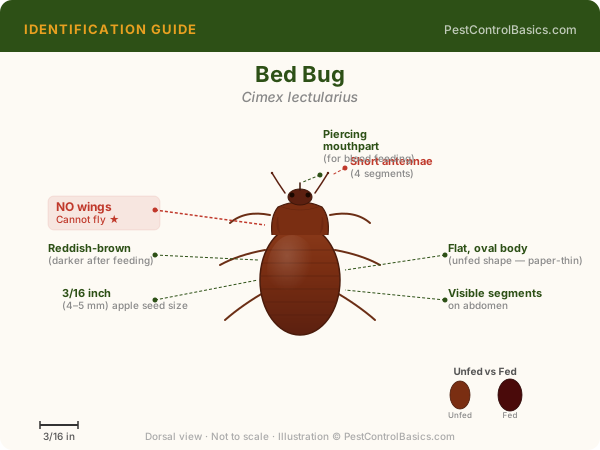
Original illustration by PestControlBasics.com. Use anatomical labels above to confirm your identification. For photo references, see the identification section below.
🔍 Identification Photo
Use this photo to confirm your identification. Click to enlarge.
Bed bug (Cimex lectularius) — flat, oval, reddish-brown, apple-seed-sized (4–5mm) when unfed; inspect mattress seams with a flashlight
📷 Wikipedia / Wikimedia Commons / CC BY-SA⚠️ Photo loaded live from Wikipedia/Wikimedia Commons (CC BY-SA).
⚠️ Photos loaded from Wikipedia/Wikimedia Commons. Appearance varies by region, age, and sex.
Why bed bugs are uniquely difficult
Cimex lectularius has been feeding on humans for over 3,500 years — it evolved alongside us. It is exquisitely adapted to avoiding detection and surviving chemical assault. Understanding its biology is essential to understanding why most treatments fail.
They Find You by CO2
Bed bugs locate sleeping hosts by following the carbon dioxide plume from breathing, body heat, and chemical kairomones. They feed for 5–10 minutes, inject an anesthetic so you don't wake, and return to harborage before morning. The anesthetic explains why most people don't feel bites in real time — they wake to discover them hours later.
Eggs Are Chemically Immune
This is the primary reason DIY fails. Every insecticide approved for bed bug use kills adult and nymph bed bugs on contact. None of them kill eggs. Eggs are chemically protected by their shell. A single treatment — no matter how thorough — leaves all eggs alive. They hatch in 6–10 days, and the population rebounds. This is why chemical treatment requires a minimum of 3 treatments over 6 weeks to catch all hatch cycles.
Heat treatment raises the entire room to 122°F+ for several hours. This kills all life stages — adults, nymphs, AND eggs — in a single treatment. No chemical resistance is possible. It's the only method that can achieve complete elimination in one visit, which is why it's the gold standard despite the higher cost.
Survival Without Feeding
An adult bed bug can survive over one year without feeding at room temperature. This means vacating a home, sealing a mattress, or thinking you've "starved them out" simply does not work. When you return after weeks or months, they will be waiting.
Confirm you actually have bed bugs
Many things cause nighttime bites — mosquitoes, fleas, mites, skin conditions. Bed bugs leave specific physical evidence. Find this evidence before spending money on treatment.
They don't come from dirt — they come from people
Bed bugs are not a sign of poor hygiene or dirty conditions. Five-star hotels, hospitals, movie theaters, and private jets have all had bed bug infestations. They travel exclusively by hitchhiking on luggage, clothing, furniture, and bags.
Top Sources of Infestation
Hotels and travel: The most common source. Always inspect hotel mattresses, headboards, and luggage racks before unpacking. Keep luggage on the luggage rack, never on the floor or bed. When returning home, inspect luggage before bringing it inside and wash all clothing immediately on hot.
Used furniture: Secondhand mattresses, couches, and bed frames are a major vector. Never bring a found mattress or upholstered furniture off the street. Inspect carefully before bringing any used upholstered item into your home.
Visiting friends or family: If someone you know has bed bugs, they may inadvertently carry them to your home in bags or clothing. Inspect your luggage and clothing after any overnight stay.
Before unpacking in any hotel: pull back sheets and inspect the mattress seam near the headboard. Check behind the headboard if it's removable. Look for dark spots, shed skins, or live bugs. Store luggage in the bathroom (hard tile — not carpet) while inspecting. On return home: launder everything immediately on the highest heat safe for the fabric.
What works — and what doesn't
The bed bug treatment landscape is full of products that kill adult bugs but fail to eliminate infestations because they don't address eggs. Here is every method, honestly assessed.
Bug bombs / foggers: Drive bugs into walls and deeper harborage. Repellent effect makes the infestation harder to treat afterward. Essential oils: No peer-reviewed evidence of effectiveness. "Natural" sprays: May kill some adults on contact, cannot reach eggs or deep harborage. Throwing away the mattress: Bugs live in the bed frame, walls, furniture, and electrical outlets — not just the mattress. Removing the mattress alone almost never resolves an infestation.
How to never get them in the first place
Travel protocol: Inspect hotel rooms before unpacking. Store luggage on hard surfaces, not carpet. When home, launder all travel clothing immediately on hot cycle and dry on high heat for 30+ minutes. Bed bugs cannot survive 30 minutes at 120°F.
Used furniture: Never accept or purchase used mattresses. Inspect all used upholstered furniture very carefully — check every seam, joint, and hidden surface with a flashlight — before bringing inside. When in doubt, decline.
Protective encasements: Installing bed bug-rated mattress and box spring encasements proactively eliminates the primary harborage site. Even if bugs enter your home, they have nowhere to hide in the bed itself, making detection and elimination far easier.
Clutter reduction: Bed bugs thrive in clutter because it multiplies harborage locations exponentially. Reducing clutter in bedrooms makes inspection easier, limits harborage, and makes any necessary treatment more effective.