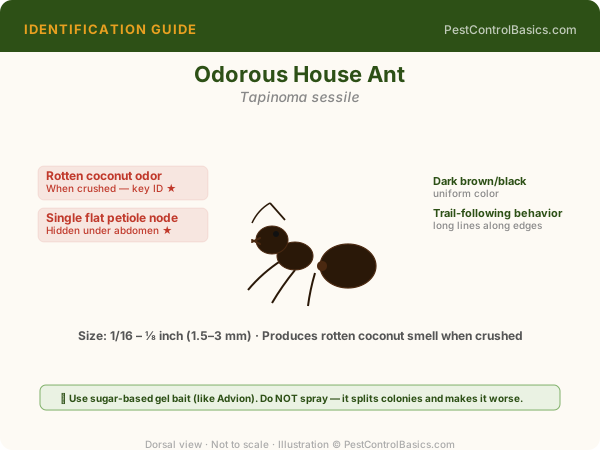
Original illustration by PestControlBasics.com. Use anatomical labels above to confirm your identification.
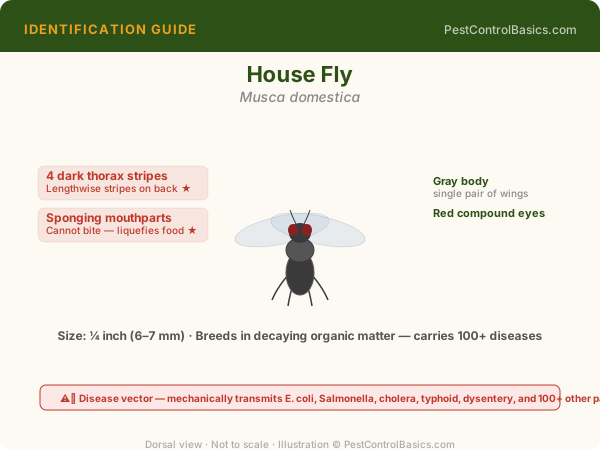
Original illustration by PestControlBasics.com. Use anatomical labels above to confirm your identification.
🔍 Identification
House centipedes actively hunt: cockroaches, silverfish, earwigs, springtails, flies (including drain flies), small spiders, carpet beetle larvae, bed bugs, and other small arthropods. A house with abundant centipedes has a food source worth investigating. A single centipede usually means the prey population is already declining from the centipede's predation — or is very small.
🧬 Biology & Behavior
Centipede presence = prey presence. Multiple centipedes consistently = significant prey population. Where you find centipedes: basements (hunting silverfish), bathrooms (hunting drain flies and springtails), kitchens (hunting cockroaches), bedrooms (occasionally hunting bed bugs). They follow their prey to wherever it concentrates.
⚠️ Damage & Health Risk
The centipede population itself is not the problem — it's an indicator. Address the underlying prey species and centipede pressure resolves naturally. Eliminating centipedes without addressing their food source is ineffective.
🔧 DIY Treatment
Identify what the centipede is hunting: multiple centipedes in bathrooms → investigate drain fly or springtail pressure. Centipedes in basement → silverfish or camel cricket investigation. Centipedes in kitchen → cockroach investigation. Address the prey; centipede population follows prey downward.
👷 When to Call a Pro
Rarely warranted for centipedes as the primary target. Address the prey pest with appropriate targeted treatment.