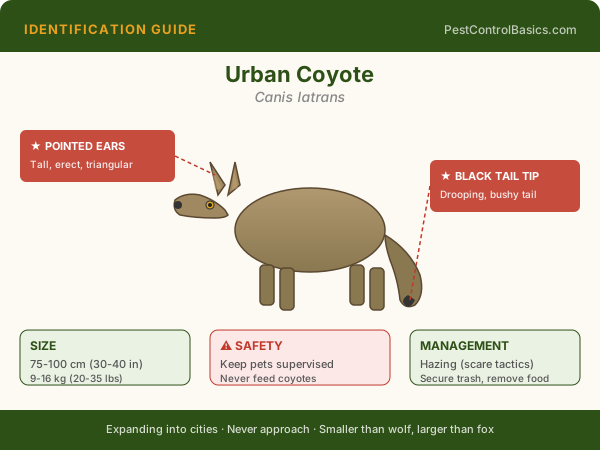
Illustrated identification guide — PestControlBasics.com
🔍 Identification
Coyotes in urban areas: 7-30 lbs; dog-like but with a bushier tail that hangs down while running (dogs carry tail up); narrower snout; pointy ears. Active at dawn, dusk, and increasingly during daytime in urban areas. Found in every US state including Hawaii. Highly adaptable — have thrived in spite of, or because of, human settlement.
🧬 Biology & Behavior
Urban coyotes are primarily feeding on easily available food: unsecured garbage, fallen fruit, rodents, cats, small dogs, and free-range pets. They're also remarkably tolerant of human presence. Coyote attacks on humans are extremely rare but attacks on pets are documented and increasing. Hazing programs (making coyotes afraid of humans) are recommended by wildlife managers.
⚠️ Damage & Health Risk
Pet predation (small dogs and cats); psychological concern for homeowners; potential livestock impact in peri-urban settings; rare but documented aggression toward humans (almost always involves prior food conditioning).
🔧 DIY Treatment
Remove food attractants: secure garbage, remove fallen fruit, stop feeding wildlife. Keep pets indoors at night. Use motion-activated lights and sprinklers. Never feed coyotes. Haze any coyote that approaches without fear — yell, wave arms, throw objects near (not at) them. Report all bold/aggressive behavior to animal control.
👷 When to Call a Pro
Wildlife control professionals and state wildlife agencies handle problem coyote situations. Lethal removal of individual coyotes is generally ineffective without removing the attractants — replacement by other coyotes occurs rapidly.