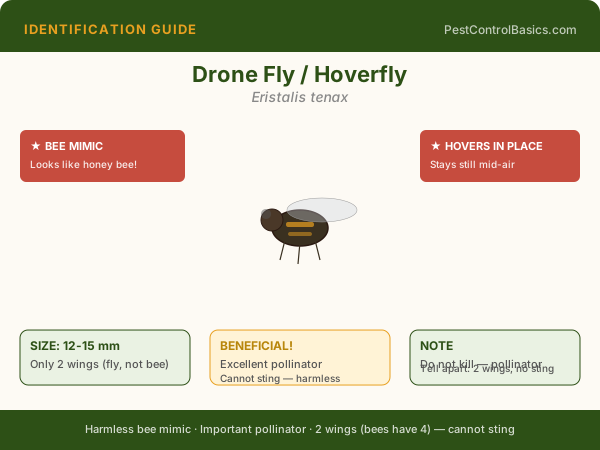
Illustrated identification guide — PestControlBasics.com
🔍 Identification
Adults: 8-15mm; yellow and black banded (bee mimic — completely harmless); can hover motionless (distinctive behavior); single pair of wings (flies); no stinger. Larvae: maggot-like; legless; found in aphid colonies; semi-transparent with visible internal anatomy. Multiple species; most have bee-mimicking patterns that provide protection from predators.
🧬 Biology & Behavior
Female hover flies lay eggs directly inside aphid colonies. Larvae emerge and consume aphids continuously — one larva can eat 400+ aphids during development. Adults feed on pollen and nectar — they're important pollinators for many plants that bees underserve. Hover flies are present whenever aphid populations exist, providing natural biological control before populations explode.
⚠️ Damage & Health Risk
Zero — highly beneficial at both adult (pollinator) and larval (aphid predator) stages.
🔧 DIY Treatment
Plant flowering herbs (dill, fennel, yarrow, phacelia) near aphid-prone crops — these attract adult hover flies to lay eggs in aphid colonies. Avoid broad-spectrum sprays that kill larvae in aphid colonies.
👷 When to Call a Pro
Never warranted — encourage and protect.