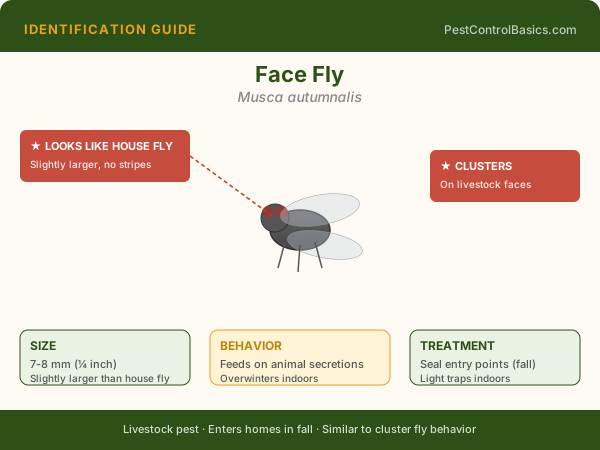
Illustrated identification guide — PestControlBasics.com
🔍 Identification
Nearly identical to house fly — 6-8mm; grey with dark stripes. Distinguished by: orange-yellow abdomen underside; eye color (male eyes nearly touching; female eyes widely spaced); behavior — aggregate in large numbers on exterior walls in fall, and cluster in wall voids and attics through winter.
🧬 Biology & Behavior
Adult face flies spend summer near livestock, feeding on ocular and nasal secretions (non-biting). Females need a blood meal (from horse flies, actually — they steal it) for egg development. Eggs laid in fresh cattle manure only. In fall, adults aggregate on building exteriors and enter attics and wall voids for winter dormancy — same behavior as cluster flies.
⚠️ Damage & Health Risk
Livestock: vector of bovine pinkeye (Moraxella bovis); welfare impact from face clustering; reduced feed conversion. Structures: identical to cluster fly problem — large numbers of sluggish flies in winter and spring.
🔧 DIY Treatment
Prevention (September spray): Apply bifenthrin or lambda-cyhalothrin to south and west exterior walls before fly entry. Exclusion: seal attic vents and building gaps. For livestock: face fly ear tags with insecticide; insecticide strips in barns; back rubbers with insecticide near water sources.
👷 When to Call a Pro
For large dairy or beef operations, professional integrated pest management for face flies is economically justified given the livestock welfare and production impacts.