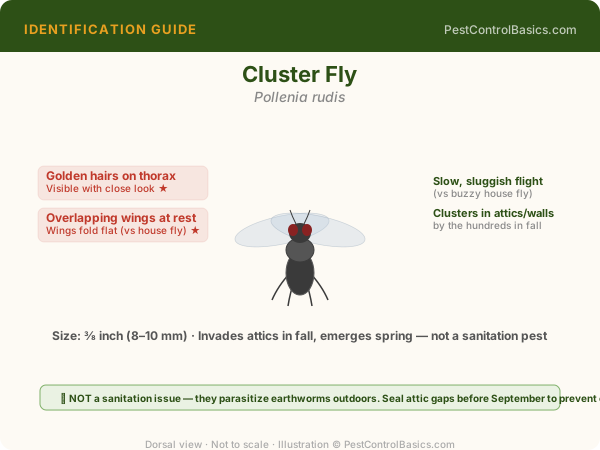
Original illustration by PestControlBasics.com. Use anatomical labels above to confirm your identification.
🔍 Identification
Adults: 8-10mm; slightly larger than house flies; dark grey with golden-yellow hairs on thorax (visible with magnification); sluggish, slow-moving compared to house flies. Found clustering in large numbers in attics and wall voids from fall through winter. Emerge slowly on warm days, appearing at south-facing windows. Distinctive raisins-like odor when crushed.
🧬 Biology & Behavior
Cluster flies are parasites of earthworms in their larval stage — they breed outdoors in soil, not indoors. Adults seek overwintering sites in fall (attics, wall voids, dense ivy) in enormous numbers. They hibernate through winter and emerge on warm days when temperatures rise. They do not breed indoors, do not feed indoors, and cause no structural damage. The problem is entirely the aggregation and emergence nuisance.
⚠️ Damage & Health Risk
Nuisance emergence at windows on warm winter days; large aggregations in attics (foul smell from crushed individuals); fly excrement on windows; psychological distress.
🔧 DIY Treatment
September perimeter spray on south-facing walls before fall aggregation. Professional attic treatment with Delta Dust or pyrethrin space spray in fall before hibernation. Seal all exterior gaps (particularly roofline and soffit vents). Vacuum indoor individuals — do not swat (staining).
👷 When to Call a Pro
Professional Delta Dust or pyrethrin application in attic spaces before first frost provides significant reduction in hibernating populations.