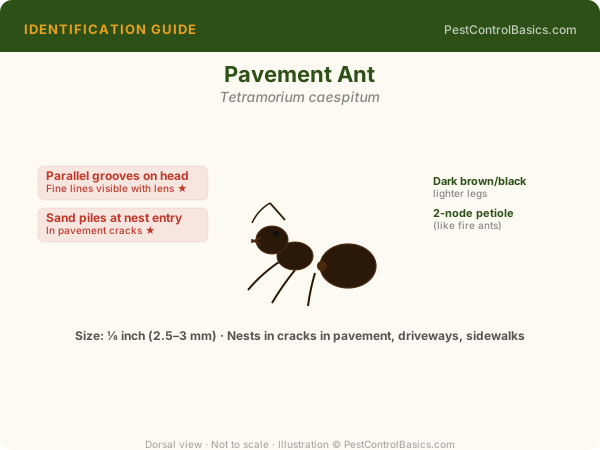
Original illustration by PestControlBasics.com. Use anatomical labels above to confirm your identification.
🔍 Identification
Workers: 2.5-3mm; dark brown to black; parallel grooves (striae) on head and thorax (visible under magnification); 2 nodes on petiole; 12-segmented antennae with 3-segmented club. Diagnostic: excavated sandy mound at crack openings in pavement, concrete, and along foundations. Multiple queens per mature colony.
🧬 Biology & Behavior
Pavement ants are native to Europe — introduced to US in the 18th-19th century and now the dominant ant in northern cities from New England to the Pacific Northwest. They engage in spectacular territory wars in spring — thousands of workers from adjacent colonies clash in massed battle on sidewalks (this is what the large accumulations of ants on sidewalks in spring represent). Colonies of 3,000-5,000 workers.
⚠️ Damage & Health Risk
Food contamination when foraging into kitchens; nuisance from pavement mounds; occasional structural entry through foundation gaps; minor nuisance.
🔧 DIY Treatment
Terro Liquid Ant Bait placed on active trails provides excellent colony control over 1-3 weeks. Exterior perimeter spray with bifenthrin reduces pavement ant pressure and prevents interior entry. Fill pavement cracks to reduce nesting sites.
👷 When to Call a Pro
Rarely warranted alone for pavement ant infestations.