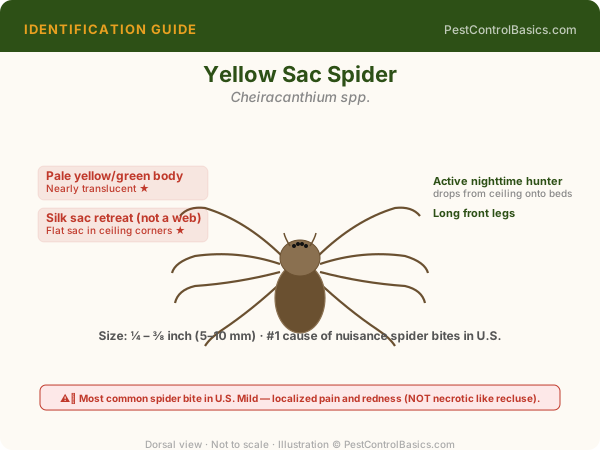
Original illustration by PestControlBasics.com. Use anatomical labels above to confirm your identification.
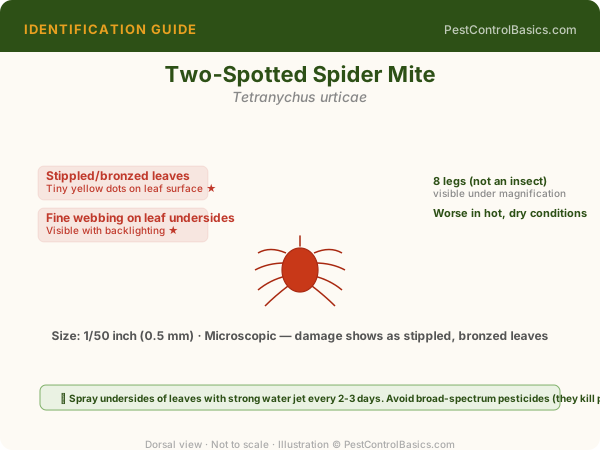
Original illustration by PestControlBasics.com. Use anatomical labels above to confirm your identification.
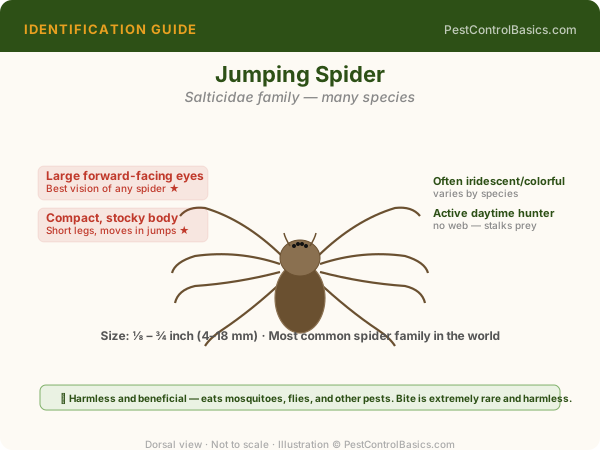
Original illustration by PestControlBasics.com. Use anatomical labels above to confirm your identification.
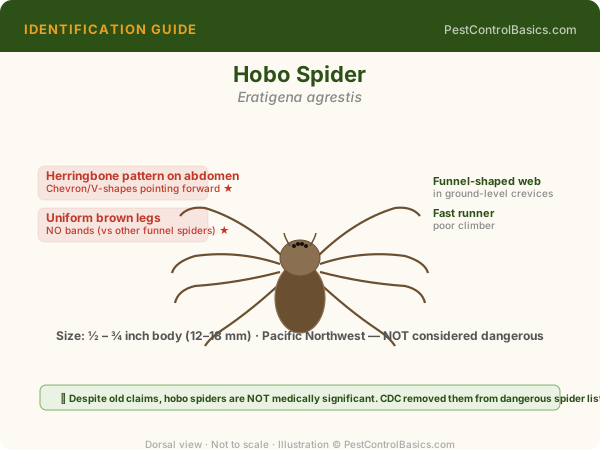
Original illustration by PestControlBasics.com. Use anatomical labels above to confirm your identification.
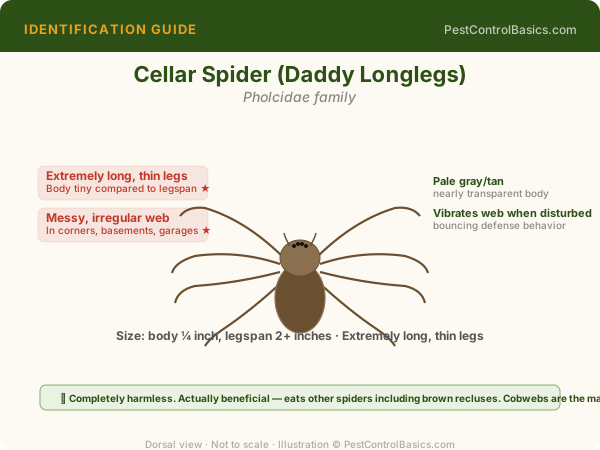
Original illustration by PestControlBasics.com. Use anatomical labels above to confirm your identification.
🔍 Identification
Adults: 6-9mm body; extremely long, thin legs (leg span 25-40mm); pale cream/grey; found in basement corners, crawl spaces, and undisturbed areas. They vibrate their web rapidly when disturbed — creating a blur that makes them appear larger than they are. Build loosely messy, non-geometric webs.
🧬 Biology & Behavior
Cellar spiders are predators of other spiders, including black widows — they enter other spiders' webs, mimic the web vibrations, and attack when the host spider investigates. They're entirely harmless to humans and pets, and actively beneficial as predators of other arthropods including pest species.
⚠️ Damage & Health Risk
Zero negative impact. The persistent myth that cellar spiders are 'the most venomous spider but their fangs are too small to pierce skin' is completely false — their venom is mild and their fangs can pierce human skin. They simply have no reason to bite and extremely rarely do.
🔧 DIY Treatment
No treatment warranted or appropriate. They're beneficial predators. If aesthetically unacceptable in specific areas, a vacuum removes the web and spider cleanly.
👷 When to Call a Pro
Never warranted.