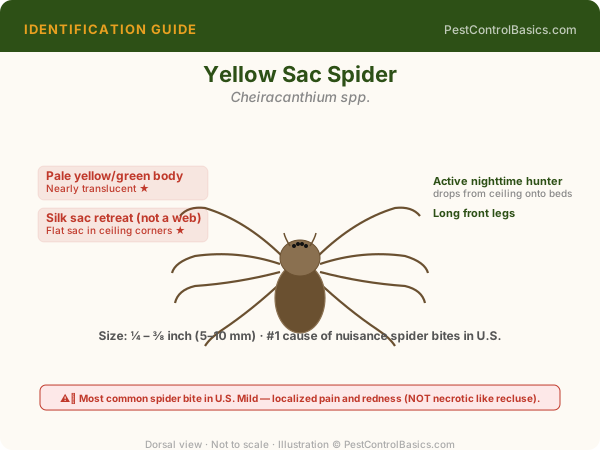
Original illustration by PestControlBasics.com. Use anatomical labels above to confirm your identification.
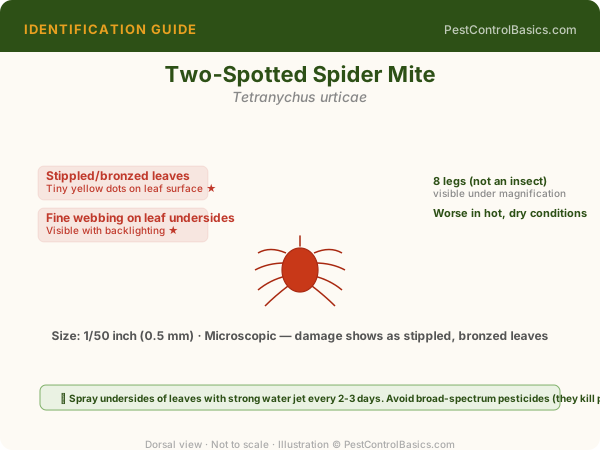
Original illustration by PestControlBasics.com. Use anatomical labels above to confirm your identification.
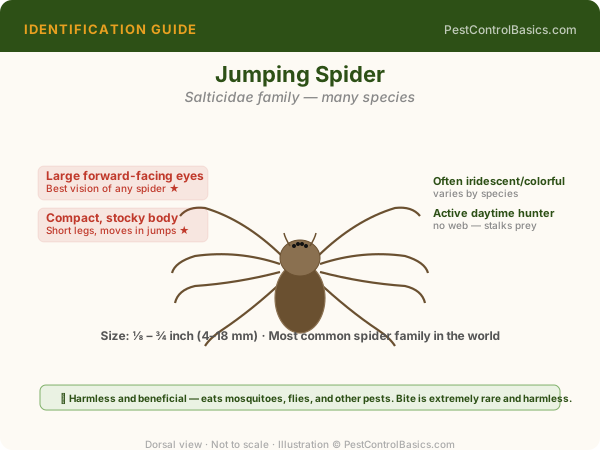
Original illustration by PestControlBasics.com. Use anatomical labels above to confirm your identification.
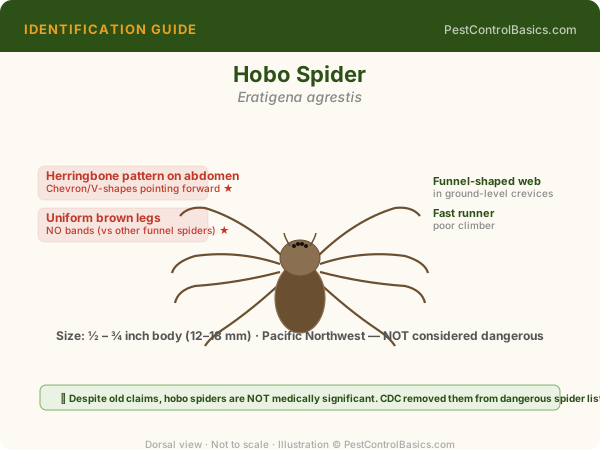
Original illustration by PestControlBasics.com. Use anatomical labels above to confirm your identification.
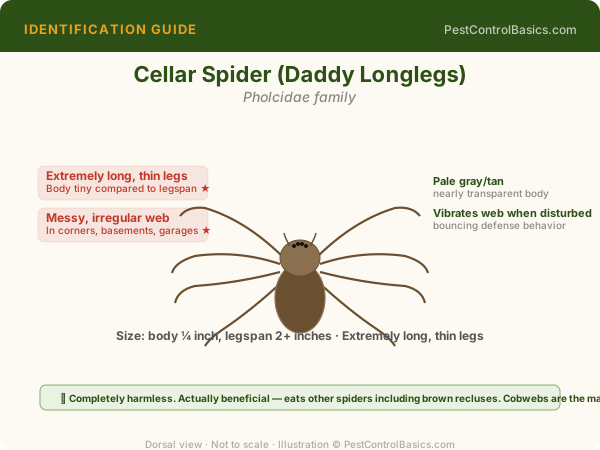
Original illustration by PestControlBasics.com. Use anatomical labels above to confirm your identification.
🔍 Identification
0.4-0.5mm — microscopic; dark reddish-brown to olive green; found on spruce, fir, arborvitae, juniper, and hemlock. Evidence: stippling (yellow or bronze discoloration) on older needles; fine webbing at branch base; shake a branch over white paper — dark specks that move = spruce mites. Needles eventually drop prematurely.
🧬 Biology & Behavior
Spruce spider mites are active in cool temperatures (40-70°F) — they reproduce in spring and fall, enter summer dormancy during hot weather, then resume in fall. This cool-season activity is exactly opposite to two-spotted spider mites. A 'dead' looking evergreen in spring that was fine last fall often has spruce mite damage from the previous fall that wasn't noticed.
⚠️ Damage & Health Risk
Needle stippling, browning, and drop; thinning of inner foliage; cumulative annual damage weakening trees; severe infestations killing branches; most damaging on arborvitae, Colorado blue spruce, and juniper.
🔧 DIY Treatment
Apply dormant oil in late winter (before spring mite activity) — smothers overwintering eggs. Miticide spray (bifenazate, hexythiazox) in early spring (April) and fall (September) when mites are active. Avoid chemical treatment during hot summer when mites are dormant.
👷 When to Call a Pro
For valuable specimen conifers, certified arborist seasonal monitoring and timed treatment prevents cumulative damage.