HomePest LibraryFruit Fly
Nuisance — Source Elimination Is Key
🪰

Fruit Fly

Drosophila melanogaster & related species

Tiny red eyes and an unstoppable ability to find fermenting organic matter anywhere in your kitchen. Fruit flies are among the most common insect complaints in homes — and among the easiest to solve once you understand that trapping adults does nothing if the breeding source remains.

Breeding sourceFermenting organic matter — not just fruit
Lifespan8–10 days adult; 25 days total lifecycle
Eggs per femaleUp to 500 over her lifetime
Key to controlEliminate every breeding source first
Trap effectivenessHigh — once source is gone
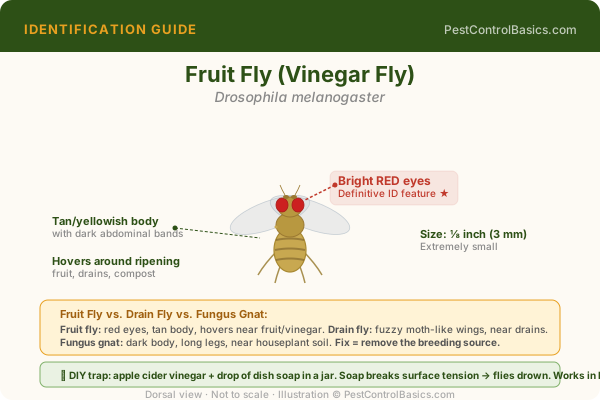
📐 FIELD GUIDE ILLUSTRATION
Fruit fly (Drosophila melanogaster) identification illustration with labeled anatomical features — PestControlBasics.com

Original illustration by PestControlBasics.com. Use anatomical labels above to confirm your identification.

🔍 Identification Photo

Use this photo to confirm your identification. Click to enlarge. Correct ID is the essential first step to effective treatment.

Common fruit fly (Drosophila melanogaster) — large RED compound eyes are the definitive field mark; tan body with dark a

Common fruit fly (Drosophila melanogaster) — large RED compound eyes are the definitive field mark; tan body with dark abdominal rings; only 3mm

📷 Wikipedia / Wikimedia Commons / CC BY-SA

⚠️ Photo loaded live from Wikipedia/Wikimedia Commons (CC BY-SA). Appearance varies by region, age, and sex. When uncertain, contact a licensed pest professional.

The Breeding Source Problem

Why traps alone don't work

Fruit fly traps kill adult fruit flies. But a female fruit fly lays up to 500 eggs in her 10-day adult lifespan, depositing batches of eggs in any fermenting organic material she can find. If the trap catches 200 adults per day but the breeding sources are still present and producing new adults, the population is self-sustaining indefinitely.

Every breeding source must be identified and eliminated: Overripe fruit and vegetables on counters are the obvious start. But fruit flies also breed in: drains with organic buildup, recycling bins (especially with sticky residue), garbage cans, vinegar and wine bottles left open, wet mops and sponges, forgotten produce in bags or drawers, empty beer or wine bottles, and damp potting soil.

The forgotten sources: The most commonly missed fruit fly breeding sites are under refrigerators (where produce falls and ferments), inside the dishwasher door seal (food particle buildup), inside recycling bins, and the overflow drain on bathroom sinks (if connected to kitchen drains).

Elimination Protocol

Source removal + trapping in sequence

Step 1 — Source elimination (Day 1): Remove ALL overripe fruit and vegetables. Empty and wash all trash cans with soap. Clean the recycling bin. Pour a quart of boiling water down kitchen and bathroom drains followed by enzymatic drain cleaner. Clean under the refrigerator. Inspect every corner of pantry and cabinets for forgotten produce.

Step 2 — Drain treatment: Invade Bio Drain or Green Gobbler enzymatic drain cleaner poured down every drain eliminates the biofilm that fruit fly larvae develop in. Apply nightly for 5 nights. This is the most commonly missed step — even a clean-looking drain can harbor fruit fly larvae in the P-trap biofilm.

Step 3 — Set traps for remaining adults: Apple cider vinegar + 2 drops dish soap in a small bowl, covered with plastic wrap with small holes poked in it. This traps the remaining adult population. Once the breeding sources are gone, the trap catches the last generation and the problem ends in 1–2 weeks.

✓ The ACV Trap Recipe That Works

Apple cider vinegar (not white vinegar — ACV is far more attractive). Add 2 drops of dish soap to break surface tension. Cover with plastic wrap and poke several pencil-tip-sized holes. Replace every 2–3 days. The soap causes flies to sink and drown rather than escaping from the surface.

Quick Reference
Size1/8 inch — very small
EyesRed — key ID feature
ColorTan/yellow-brown body
WingsClear, held flat
vs. Drain flyDrain flies are fuzzy/moth-like; fruit flies have red eyes
Breeding sitesFruit, drains, garbage, wet mops, vinegar
Lifespan8–10 days as adult
Best trapApple cider vinegar + dish soap
Related Guides
🪰 Fruit Fly & Boxelder Guide →🪰 Drain Fly Guide →🌿 Organic Pest Options →
Not sure? AI Bug ID →Find a Pro →
📚 Sources: EPA Termite Guide · NPMA Termite Info
Published: Jan 1, 2025 · Updated: Apr 7, 2026
Fruit Fly
Fruit Fly

Frequently Asked Questions

How do I know if I have Fruit Fly?

Signs of Fruit Fly include physical sightings, droppings or frass, damage to food or materials, and unusual odors. Inspect hidden areas like wall voids, behind appliances, and in storage spaces. A flashlight inspection after dark is often most revealing.

Are Fruit Fly dangerous to humans or pets?

Fruit Fly can pose health risks including bites, allergic reactions, food contamination, and disease transmission. Children, elderly, and pets are especially vulnerable. Consult a pest management professional when an infestation is confirmed.

Can I eliminate Fruit Fly myself?

Light infestations may be manageable with DIY baits, traps, and targeted treatments. Established infestations typically require professional intervention. Misapplied products often scatter pests and worsen the problem long-term.

How long does Fruit Fly treatment take?

Timelines vary by infestation size and method. Baits may take 1–4 weeks to work through a colony. Chemical treatments often require 2–3 applications spaced 2–4 weeks apart. Monitor for 30–60 days after treatment to confirm elimination.

What attracts Fruit Fly to my home?

Fruit Fly are typically drawn by food sources, standing moisture, warmth, and shelter. Sealing entry points, reducing clutter, fixing leaks, and storing food in airtight containers are the most effective long-term prevention measures.

Related Resources

📚 Full Pest Library🧪 DIY vs. Pro Quiz💰 Cost Guide🌿 IPM Guide🔍 Find a Pro
🧪 Recommended Treatment Products
Pyrethrin Aerosol Bti (Drain/Fungus Gnats) IPM Guide
Full product guides with mixing rates and safety info. → Browse All 130 Pesticide Guides
🔗 Related Pests
Crane Fly House Fly Drain Fly Blow Fly Horse Fly Cluster Fly
Compare similar pests to confirm your identification. → Use our ID Flowchart
🔮
Reviewed by Derek GiordanoContent on PestControlBasics.com is developed with input from certified pest management professionals and cross-referenced against EPA, CDC, and university extension guidance. Last reviewed: April 2026.

🗺️ US Distribution — Fruit Fly

image/svg+xml
Common Occasional Not Present
States Present
51
Occasional
0
Primary Region
All 50 states (indoor pest)
📊 Source: University extension services, USDA, CDC vector data, and published entomological surveys.