HomePest LibraryCicada Killer
Nuisance — Males Cannot Sting
🐝

Cicada Killer

Sphecius speciosus — Eastern Cicada Killer

The largest wasp in North America at 1.5 inches — and one of the most harmless relative to its appearance. Cicada killers are solitary wasps. Males are incapable of stinging (they have no stinger). Females can sting but almost never do. They dig burrows in lawns to provision with paralyzed cicadas for their larvae.

Males sting?NO — no stinger; all aerial display is bluff
Females sting?Almost never — would require direct handling
Colony?No — solitary wasp; no nest to defend
SeasonJuly–August — tied to cicada emergence
Lawn damageBurrow mounds; selective control if needed
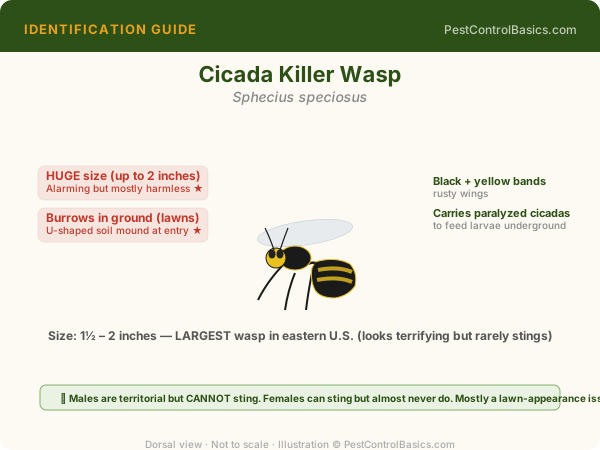
📐 FIELD GUIDE ILLUSTRATION
Cicada killer wasp (Sphecius speciosus) identification illustration with labeled anatomical features — PestControlBasics.com

Original illustration by PestControlBasics.com. Use the labeled features above to confirm your identification.

🔍 Identification Photo

Use this photo to confirm your identification. Click to enlarge. Correct ID is the essential first step to effective treatment.

Cicada killer (Sphecius speciosus) — enormous (1.5 inches); solitary ground-nesting wasp; males cannot sting; females ra

Cicada killer (Sphecius speciosus) — enormous (1.5 inches); solitary ground-nesting wasp; males cannot sting; females rarely sting unless handled

📷 Wikipedia / Wikimedia Commons / CC BY-SA

⚠️ Photo loaded live from Wikipedia/Wikimedia Commons (CC BY-SA). Appearance varies by region, age, and sex. When uncertain, contact a licensed pest professional.

Biology

What cicada killers actually do

Female cicada killers hunt annual cicadas in trees and shrubs, stinging them to paralyze (not kill) them, then carrying or dragging them back to burrow entrances. The cicada is too heavy to fly with — females often laboriously climb vegetation to glide with their cargo, making multiple attempts to transport cicadas that may weigh twice as much as they do.

The burrow entrance (3/4 inch diameter hole with a kidney-shaped pile of excavated soil) leads to a series of cells, each provisioned with 1–3 paralyzed cicadas and a single wasp egg. The egg hatches, the larva feeds on the living cicada, and overwinters as a pupa to emerge the following July.

Males establish territories and aggressively patrol them — but they have no stinger. What appears to be aggressive posturing from a large "bee" is completely harmless display behavior. Males may hover within inches of your face or dive at your head. They cannot sting you. This is genuinely one of the largest differences between apparent threat and actual danger in North American insects.

Control

When and how to treat burrow areas

For most homeowners, the correct answer is to do nothing. Cicada killers are temporary (active for 4–6 weeks in July–August), solitary, and ecologically valuable as cicada population controllers. They will not sting you or your children during normal outdoor activity.

If burrow numbers are high: Cicada killers prefer dry, sandy, or compacted soil with sparse vegetation cover. The best long-term deterrent is thickening the lawn in affected areas — dense turf with good grass coverage is unattractive for burrowing. Improve irrigation and overseed bare or thin lawn areas in fall.

Direct burrow treatment (if needed): Apply carbaryl or permethrin dust into burrow entrances at night using a puffer duster. Treatments are most effective when the female is inside provisioning. Seal treated burrows with soil after 48 hours.

Quick Reference
Size1.5 inches — largest U.S. wasp
ColorBlack and yellow banded abdomen; rusty head
Male behaviorHovers, dives, displays — cannot sting
Female behaviorBurrows in lawn, hunts cicadas
Sting riskMale: zero; Female: extremely rare
SeasonJuly–August
Burrow3/4 inch hole with kidney-shaped soil mound
Diet as larvaParalyzed cicadas provisioned by female
AI Bug Identifier →Find a Pro →
📚 Sources: EPA Termite Guide · NPMA Termite Info
Published: Jan 1, 2025 · Updated: Apr 7, 2026
Cicada Killer
Cicada Killer

Frequently Asked Questions

How do I know if I have Cicada Killer?

Signs of Cicada Killer include physical sightings, droppings or frass, damage to food or materials, and unusual odors. Inspect hidden areas like wall voids, behind appliances, and in storage spaces. A flashlight inspection after dark is often most revealing.

Are Cicada Killer dangerous to humans or pets?

Cicada Killer can pose health risks including bites, allergic reactions, food contamination, and disease transmission. Children, elderly, and pets are especially vulnerable. Consult a pest management professional when an infestation is confirmed.

Can I eliminate Cicada Killer myself?

Light infestations may be manageable with DIY baits, traps, and targeted treatments. Established infestations typically require professional intervention. Misapplied products often scatter pests and worsen the problem long-term.

How long does Cicada Killer treatment take?

Timelines vary by infestation size and method. Baits may take 1–4 weeks to work through a colony. Chemical treatments often require 2–3 applications spaced 2–4 weeks apart. Monitor for 30–60 days after treatment to confirm elimination.

What attracts Cicada Killer to my home?

Cicada Killer are typically drawn by food sources, standing moisture, warmth, and shelter. Sealing entry points, reducing clutter, fixing leaks, and storing food in airtight containers are the most effective long-term prevention measures.

Related Resources

📚 Full Pest Library🧪 DIY vs. Pro Quiz💰 Cost Guide🌿 IPM Guide🔍 Find a Pro
🧪 Recommended Treatment Products
Bifenthrin Diatomaceous Earth Termiticide Comparison Fipronil (Termidor) Permethrin Clothing
Full product guides with mixing rates and safety info. → Browse All 130 Pesticide Guides
🔗 Related Pests
Bumble Bee Ground Nesting Velvet Ant Thread Waisted Wasp Carpenter Bee Wasps
Compare similar pests to confirm your identification. → Use our ID Flowchart
🔮
Reviewed by Derek GiordanoContent on PestControlBasics.com is developed with input from certified pest management professionals and cross-referenced against EPA, CDC, and university extension guidance. Last reviewed: April 2026.

🗺️ US Distribution — Cicada Killer Wasp

image/svg+xml
Common Occasional Not Present
States Present
49
Occasional
2
Primary Region
Continental US
📊 Source: University extension services, USDA, CDC vector data, and published entomological surveys.